We know what you're thinking, Windermere is not a lake. It's actual classification is in the name, a mere, but it's helpful to be able to distinguish the lake from the town of the same name.
Windermere is the longest body of water in England measuring 10.5 miles, and is dotted with no fewer than fourteen islands. Surrounded by magnificent mountains, parkland, woodland and forest, it is no surprise that visitors flock to its shores. Most of the 15 million visitors to The Lake District each year enjoy some aspect of the lake’s beauty and charm.
There’s something so relaxing about staying at a venue with a waterfront and a jetty with yachts and boats of all shapes and sizes seemingly ready to whisk you off across the water.
So why not book in for a sailing, canoeing or paddleboarding session at the Low Wood Bay Watersports Centre? It offers a broad range of watersports, boat and equipment hire and an experienced team of instructors for all ages and abilities.
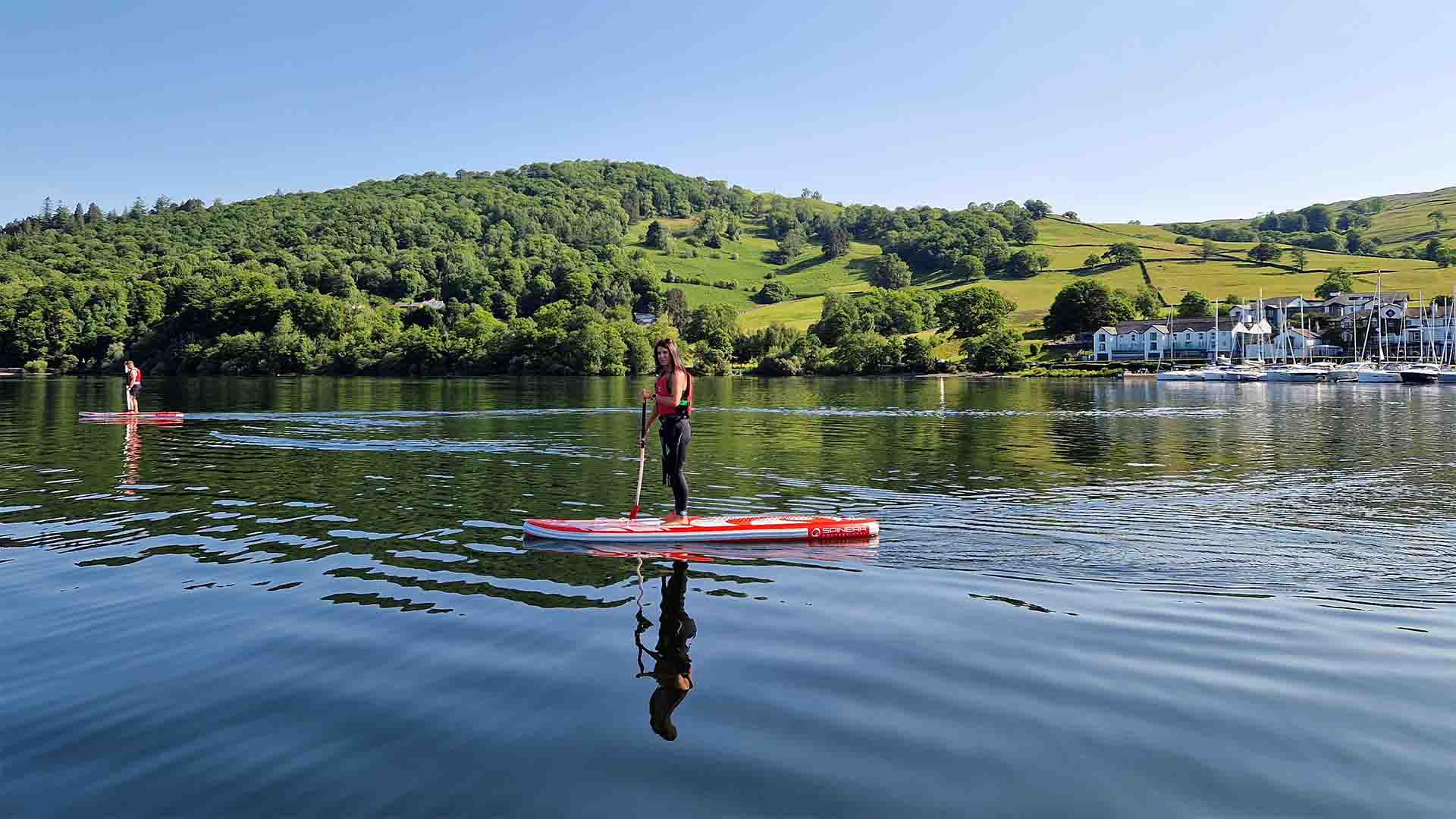
Paddleboarding on Windermere has become a highly popular activity and allows you to explore the shoreline with a sense of freedom, solitude and tranquillity.
And if you’d rather relax and let others do the work, you can just hop aboard a steamer with Windermere Lake Cruises from the Ambleside shoreline at Waterhead.
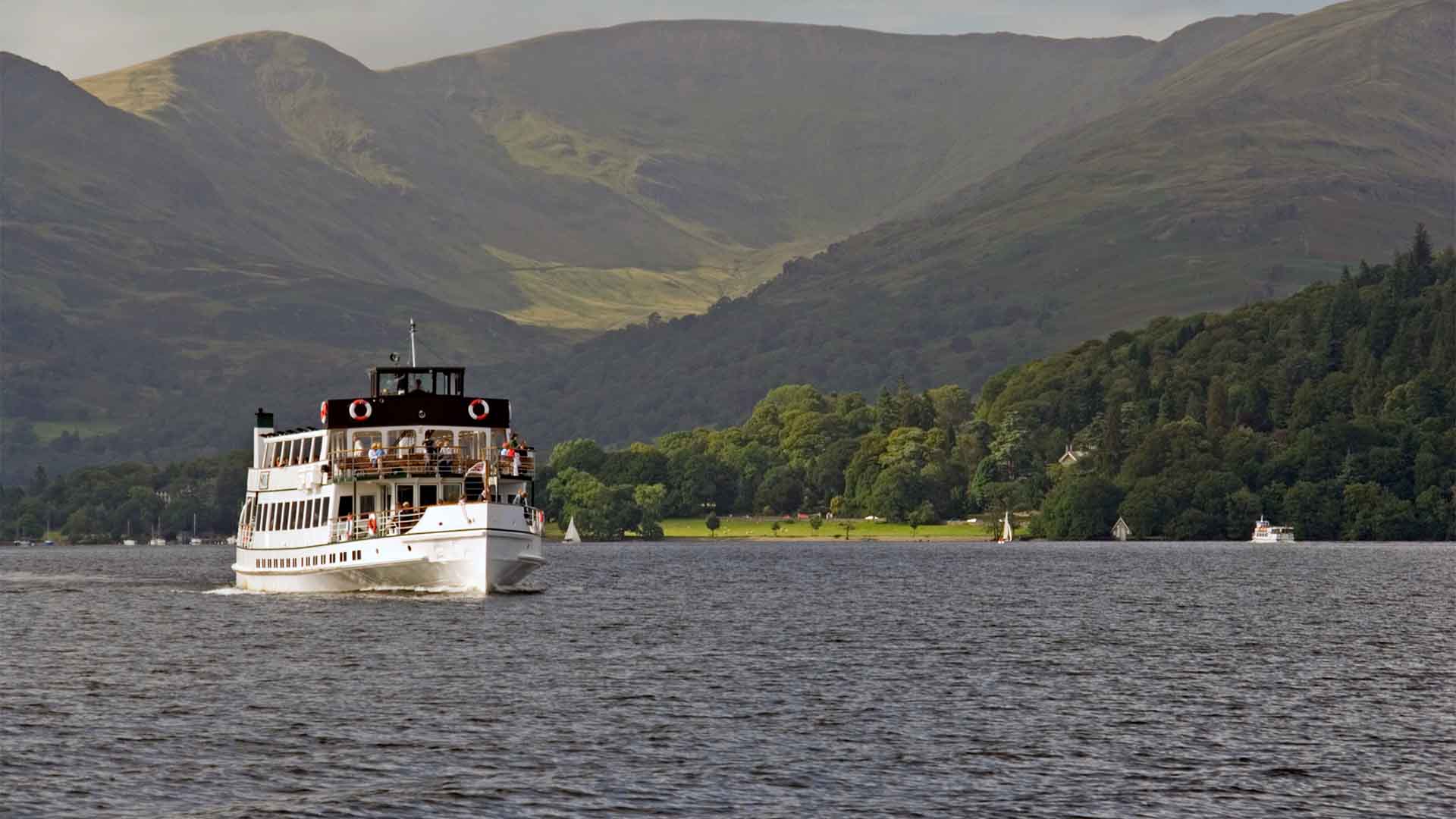
Windermere is the longest body of water in England, measuring 10.5 miles and featuring fourteen islands. There are lots of different cruise and ticket to suit your plans, allowing you the chance to explore the lakeside scenery across to Bowness. And if you are staying at Low Wood Bay, you can get discounts and special offers.
Another popular big day out on Windermere is a trip across the water to the mock-gothic turreted and towering edifice Wray Castle. Its grounds and woodlands make for a fun day out in nature’s playground by the shores of the lake. The building itself is home to a host of ever-changing displays and exhibitions.
Arthur Ransome, journalist and writer, attended school in Windermere, and later in life he and his family settled in the Winster valley. From there, Arthur penned many of the Swallows and Amazons series, based on locations in the Lake District. The books caught the imagination of thousands of young readers, including HM Elizabeth II, as they followed the Walker and Blackett families in their swashbuckling adventures.
William Wordsworth heralded the call to the Lake District, perhaps unwittingly, with the publication of the fifth edition of his Guide to the Lakes in 1835. In 1847 with the extension of the railway from the market town of Kendal to the village of Windermere, the trickle of visitors to the area, previously on horseback or in horse-drawn carriage, was set to become a flood.
Alfred Wainwright, another famous Lake District character, was both a mountaineer and gifted artist. His love of walking in the Cumbrian hills led him to publish his Pictorial Guide to the Lakeland Fells. Meticulous hand-drawn maps and panoramas of 214 mountains and hills across the region are still used by many visitors to the area. Indeed, there are an increasing number of Wainright Baggers intent on ticking off all 214 peaks.
The Lake District National Park was formed in 1951. This important recognition sought to protect the environment from commercial or industrial exploitation, and to retain all that we have grown to love about the character and beauty of this landscape. In 2017 the National Park was designated a UNESCO World Heritage Site, further protecting the important legacy of nature, farming and local industry.
Many people are drawn to the impressive Lake District mountains, either to gaze upward towards the summits, or indeed to don their boots and scale the peaks. The rewards for the latter are some magnificent views from the top. There are over 150 Lake District mountains - four over 3000 feet, including England’s highest mountain, Scafell Pike at 3,206 feet.

Sign up today and receive news on our latest special offers and events.